Our Approach
Where behavior actually changes.
Teams are not built in classrooms. They are built where behavior cannot be faked, performed, or rehearsed.
01 — The Gap
A structural problem, not a budget one.
Companies spend record sums on offsites and training every year, yet only about 20% of what is taught in a classroom transfers into actual behavior. The other 80% fades within weeks.
Meanwhile, most organizations say their teams still struggle to trust, communicate, and stay regulated under pressure. The shortfall is not in dollars — it is in how the experience is delivered.
02 — The Research
70 / 20 / 10.
The Center for Creative Leadership's framework is unambiguous: roughly 70% of learning comes from challenging experience, 20% from relationships, and only 10% from formal coursework.
We deliver experiential team development through structured scuba programs. Skills are not described but practiced. They are not theorized but performed.
The skills last because they are built, not taught.
70%
Of behavior learned through challenging experience
20%
Learned through relationships and others
10%
Learned through formal coursework
03 — The Vehicle
Why the water.
Diving is a controlled environment where behavior is physically visible, immediate, and impossible to fake. The systems that govern our bodies above water are the same systems that a diver needs to master underwater.
Underwater, the gap between a dysregulated person and a regulated one is visible within seconds. Your buoyancy shifts, breathing rates change and stress and tension read across the group. The behaviors that can be covered in a conference room are immediate, observable, and impossible to talk past in the water.
Underwater, knowing is not enough. It requires behavior. And behavior, once practiced, stays.
04 — The Method
How a program is actually built.
The diving is the visible part. This is the work around it.
01
Discovery call with the sponsor
Before anything is designed, we talk. Who is coming, what the team is actually struggling with, what the sponsor needs to be different afterward, and what abilities, fears, and medical considerations are in the room.
02
Objectives set in writing
We agree two or three specific behavioral objectives for the day and write them down. Everything that follows is designed against them, and the debrief is measured against them.
03
In-water design
Tasks are chosen to surface the behaviors you named — how the team communicates without speech, how people pair up, who notices distress, who takes charge, and who quietly steadies everyone else. The diving is the instrument, never the point.
04
Observation, not assumption
During the program we are watching and recording specific behavior, not impressions. Surface observers contribute their view too. Nothing raised in the debrief is theoretical — it happened, and everyone saw it.
05
Structured debrief
A guided conversation moving from what happened, to what it meant, to what changes on Monday. It is facilitated so that quieter people speak and senior people listen, and it ends with named, specific commitments rather than good feelings.
06
Thirty-day follow-up
A written summary for the sponsor, and a follow-up conversation thirty days out to test whether the commitments held. Development that is never revisited is development that fades.
05 — Your Facilitator
Qualified in the water. Qualified in the room.
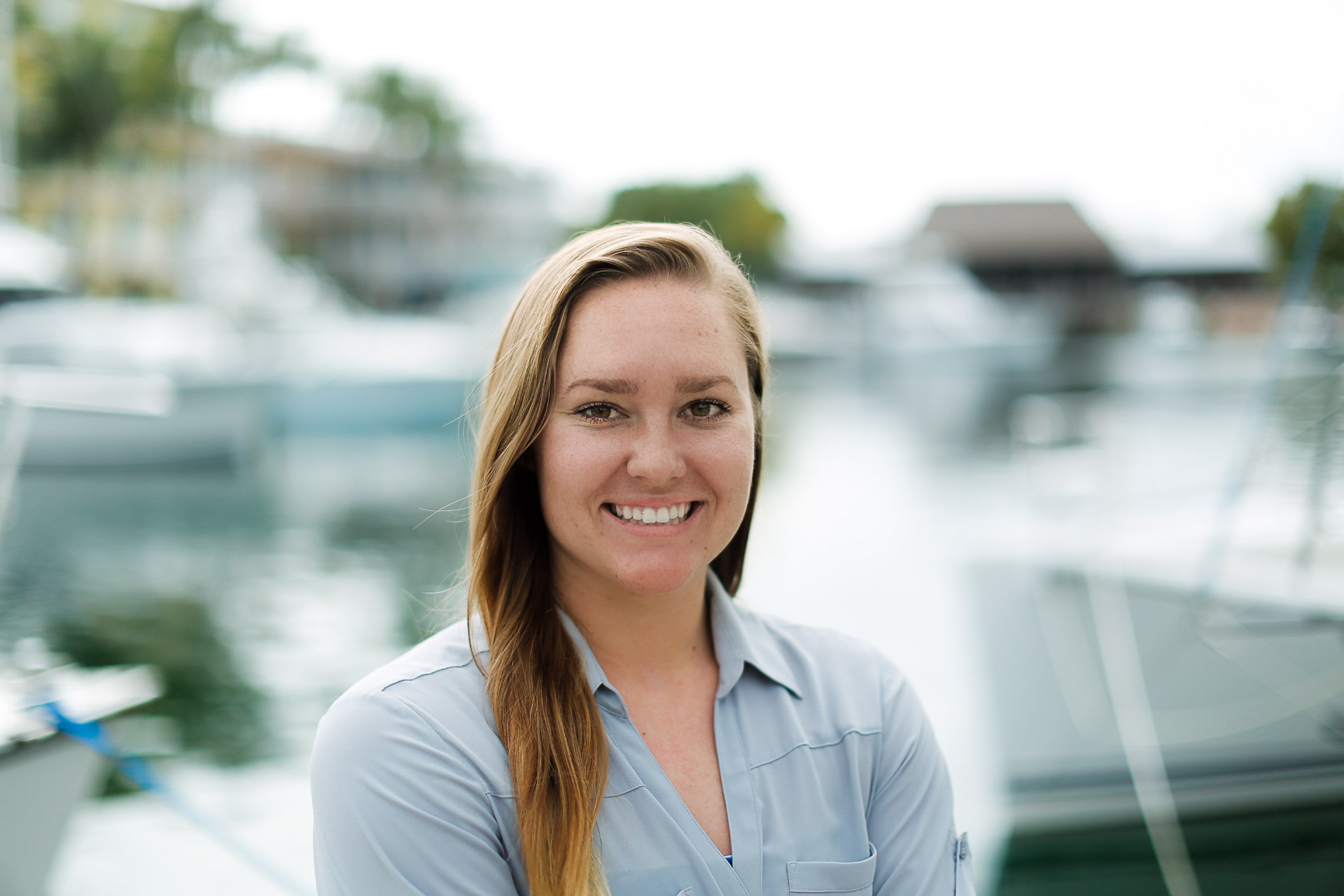
The scuba credentials are the easy part to verify: a PADI Master Scuba Diver Trainer rating, a USCG-endorsed Captain's license, advanced medical training as Medical Person In Charge aboard vessels, and over 180 students certified with a clean safety record.
The development work has a longer history than the business does. Before Thalassa, Jessica trained Divemasters — the first professional rung in diving — which is far less about skills in the water than it is about the soft ones: how to hold a room, how to stay calm when something goes wrong, how to keep other people calm, how to give feedback that lands, and how to carry yourself as someone others will follow. She has coached and developed dive instructors, crew who reported to her aboard private yachts, and students who arrived frightened and left capable.
Alongside that: years as a personal trainer and group fitness instructor, work that is nothing but reading a room, meeting people at wildly different ability levels, and pushing someone precisely as far as they can go and no further. She has mentored since college, and teaching is the part of all of it she loves most.
The philosophy: people do not change because they were told something. They change because they did something difficult, were seen doing it, and were helped to make sense of it afterward.
That is why every Thalassa program ends in a facilitated debrief rather than a photograph, and why nobody is pushed past their limit to get there. Safety and psychological safety are the same discipline.
06 — Why Now
The organizations addressing the 70% are quietly outpacing the ones still investing in the 10%.
Begin a Conversation